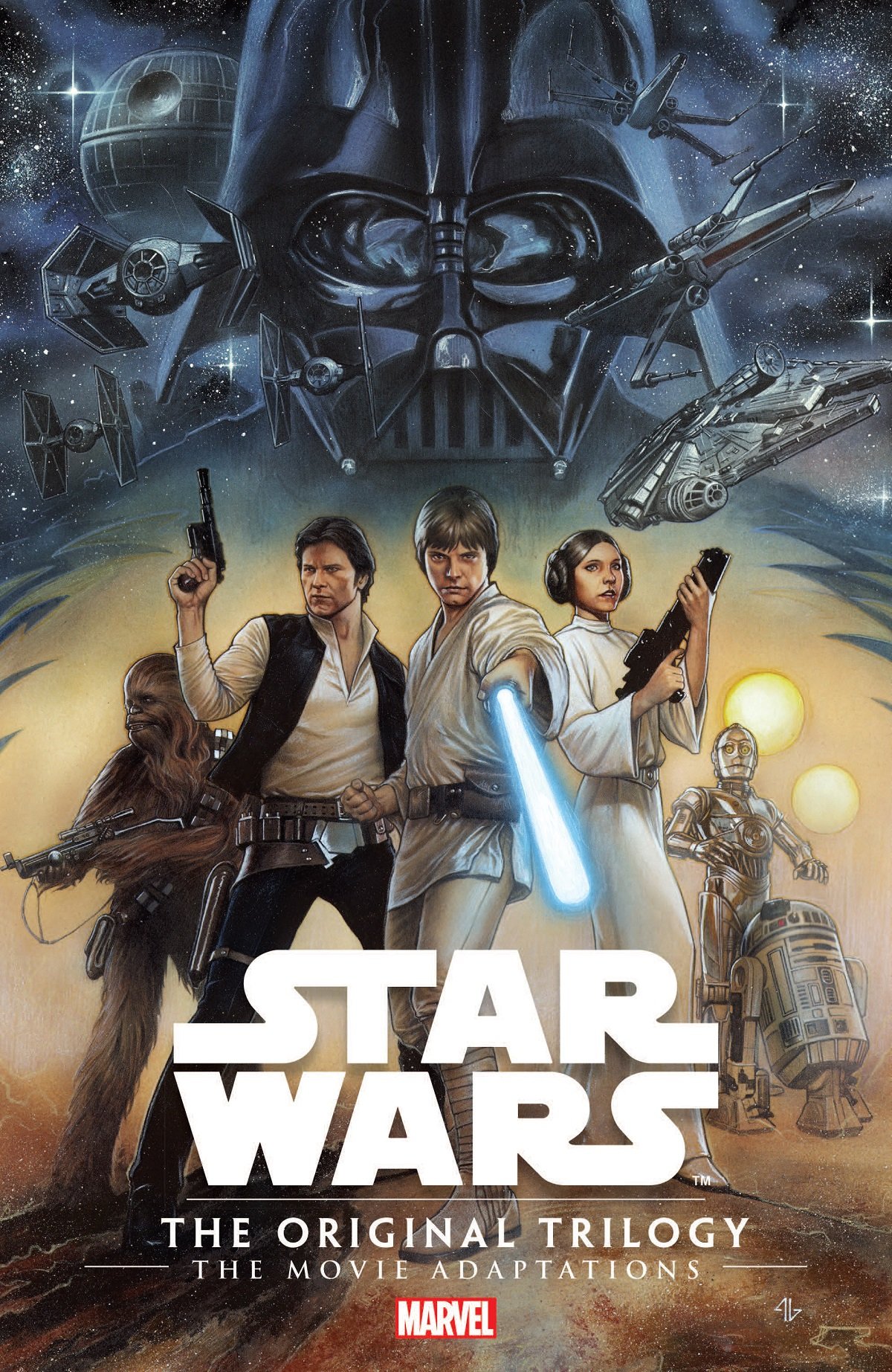
The Star Wars universe isn't just a collection of films; it's a sprawling, ever-evolving narrative tapestry woven from countless stories, characters, and worlds brought to life through diverse media. Understanding the depth and breadth of Portrayals & Adaptations Across Star Wars Media isn't merely about tracking timelines or canon; it's about appreciating how a single, powerful vision blossomed into a cultural phenomenon, shaped and reshaped by generations of creators and fans alike. From its humble origins on the big screen, Star Wars has continuously redefined itself through books, comics, games, and television, each adaptation adding new layers to its iconic mythology and defining its enduring universe.
At a Glance: How Star Wars Became a Multiverse of Stories
- From Film to Frontier: Star Wars rapidly expanded beyond its 1977 cinematic debut, embracing novels, comics, video games, and radio dramas as vital storytelling conduits.
- The Original Expanded Universe (EU): Before 2014, a vast collection of non-film material, known as the EU, enriched the galaxy far, far away, often with George Lucas's blessing for concurrent development.
- A Galaxy Divided: Canon vs. Legends: In 2014, Disney's acquisition of Lucasfilm led to the rebranding of most EU content as Star Wars Legends, declaring it non-canonical to make way for a unified new canon.
- The Holocron Hierarchy: Before the reset, Lucasfilm used a "Holocron database" to manage canon levels, with George Lucas's films (G-canon) always taking precedence.
- A Continuous Canvas: The new canon, overseen by the Lucasfilm Story Group, aims for cohesive storytelling across all media, from sequel films to Disney+ series, novels, and comics.
- Inspired by Everything: Star Wars itself is a masterclass in adaptation, drawing deep inspiration from classic films, literature, animation, and art to forge its distinct identity.
- Dynamic Storytelling: Characters, species, and concepts often jump between media, with fan favorites like Grand Admiral Thrawn making the leap from Legends to the new canon.
The Dawn of a Universe: Expanding Beyond the Silver Screen
When Star Wars premiered in 1977, it ignited imaginations worldwide, but few could have predicted the sheer scale of the universe it would soon inhabit. Even before the first film hit theaters, George Lucas's vision was already taking root in print with the 1976 novelization, Star Wars: From the Adventures of Luke Skywalker. This wasn't just a film tie-in; it was the genesis of a sprawling narrative ecosystem, one where stories could flourish in myriad forms, concurrently with and in the gaps between the cinematic sagas.
Early on, Lucas recognized the potential of these spin-off tales. Alan Dean Foster's 1978 sequel, Splinter of the Mind's Eye, was even considered as a low-budget film follow-up. This willingness to explore new avenues quickly defined the Star Wars experience. Marvel Comics launched its Star Wars series in April 1977, becoming a financial lifeline for the publisher and establishing comics as a crucial medium for galactic adventures. From radio dramatizations by Brian Daley to novel trilogies like The Han Solo Adventures and The Adventures of Lando Calrissian, the universe was growing organically, creating a rich tapestry that fans eagerly consumed. Even quirky offerings like The Star Wars Holiday Special (1978) were part of this early, adventurous expansion.
The 1980s saw further diversification with early electronic and video games, Ewoks television films, and animated series like Ewoks and Droids. By the time the Star Tours ride opened in 1987, celebrating the saga's 10th anniversary, it was clear that Star Wars was more than just movies; it was an immersive experience available across multiple platforms.
The "Dark Times" and the Rise of the Expanded Universe
Following the initial boom, Star Wars media releases largely paused after 1987, a period fans wistfully dubbed "The Dark Times." This lull sparked fears that the franchise might simply fade away. Yet, even during this quiet spell, a subtle but significant adaptation emerged: West End Games' Star Wars: The Roleplaying Game (1987). More than just a game, its ancillary materials meticulously detailed characters, planets, and events, providing an invaluable resource that would later inspire and inform a new generation of novelists, essentially acting as the franchise's unofficial lore bible.
The perceived silence was dramatically broken in 1991 with Timothy Zahn's Heir to the Empire. This novel wasn't just a hit—it became a #1 New York Times Best Seller, single-handedly revitalizing Star Wars and introducing iconic characters like Grand Admiral Thrawn and Mara Jade. The subsequent Thrawn trilogy is widely credited with kickstarting what became known as the Expanded Universe (EU), a vast collection of interconnected stories that gave fans a reason to believe in the future of the galaxy after Return of the Jedi. These novels were so impactful that many believe they influenced George Lucas's decision to greenlight the prequel trilogy.
This era also saw Dark Horse Comics delve deep, notably with Dark Empire (1991–1995), which controversially resurrected Emperor Palpatine and Boba Fett—a creative decision that even Zahn criticized, highlighting the independent spirit of this burgeoning universe. Tales of the Jedi (1993) then pushed the timeline back, exploring the Old Republic era and laying the groundwork for beloved narratives like the Knights of the Old Republic games. By 1994, Lucas Licensing acknowledged this growing mythology, clarifying that while the films, screenplays, radio dramas, and novelizations were Lucas's "gospel," other works were "taken into account in the overall continuity," forming a vast, intricate mythology.
Bridging Eras: Prequels, Multimedia Campaigns, and the Clone Wars
The mid-1990s marked a strategic push to invigorate the franchise further, particularly with the multimedia campaign Shadows of the Empire (1996). Set between The Empire Strikes Back and Return of the Jedi, this ambitious project encompassed a novel, comic series, and video game, designed to bridge the gap and reignite excitement before the impending prequel trilogy and the 1997 Special Editions.
As the prequel era approached, Lucas himself began to integrate elements from the EU into his cinematic vision, notably adopting Coruscant (a planet created by Timothy Zahn) into the films. This collaboration underscored the fluid nature of portrayals across media; characters like Aayla Secura, who originated in comics, made seamless transitions to the big screen.
The prequels opened up new frontiers for adaptation. The 2003 Clone Wars animated series, masterminded by Genndy Tartakovsky, provided a visually distinct and action-packed exploration of the conflict. However, the most significant adaptation of this era came with George Lucas's own The Clone Wars animated film (2008) and subsequent TV series (2008–2020). This show not only dove deep into the war but also introduced pivotal new characters like Anakin Skywalker's Padawan, Ahsoka Tano, whose journey has since become central to the Star Wars narrative. By 2004, the cumulative effect of these adaptations was staggering: over 1,100 Star Wars titles had been published, with over 65 million books in print, solidifying Star Wars as a pervasive cultural touchpoint.
The Holocron and the Hierarchy of Canon
Before the dramatic canon shifts of the Disney era, Lucasfilm maintained an internal "Holocron database." Created by Leland Chee in 2000, this ambitious project tracked over 55,000 entries—characters, locations, events, and technologies—all with the goal of fostering a continuous, unified history that wouldn't conflict with George Lucas's films.
Lucasfilm clarified that the films were the "absolute canon," while other media were considered interpretations. George Lucas himself (in 2005) acknowledged keeping his own universe distinct from the Expanded Universe, even while appreciating the enthusiasm of others to explore new directions. This established a fascinating hierarchy of canonicity, which served as a blueprint for understanding Portrayals & Adaptations Across Star Wars Media for years:
- G-canon (George Lucas canon): The six primary films (Episodes I–VI), reigning supreme over all other levels.
- T-canon (Television canon): The Clone Wars TV series, largely due to Lucas's direct involvement in its creation.
- C-canon (Continuity canon): The bulk of the Expanded Universe material, including books, comics, and video games. Significant changes to this level often required Lucas's approval.
- S-canon (Secondary canon): Elements from C-canon that were directly contradicted by higher levels of canon (G or T), effectively demoting them.
- D-canon (Detours canon): Elements from the unreleased Detours show, holding very low canonicity.
- N-canon (Non-canon): "What if" stories, crossovers, game statistics, or any material explicitly contradicted and deemed outside the main continuity.
This system, though complex, reflected a careful effort to manage the increasingly vast Star Wars universe and provided a framework for how different adaptations coexisted (or didn't).
The Seismic Shift: Disney, Legends, and a New Canon
The landscape of Star Wars adaptations fundamentally changed on October 30, 2012, when The Walt Disney Company acquired Lucasfilm. To ensure creative freedom for the planned sequel trilogy and to establish a unified narrative going forward, a "Lucasfilm Story Group" was formed. Then, on April 25, 2014, a monumental announcement arrived: most of the Expanded Universe material (with the notable exception of The Clone Wars television series) was rebranded as Star Wars Legends and declared non-canonical.
This decision, while necessary for a coherent new saga, was a seismic event for long-time fans. Decades of beloved stories, characters, and intricate lore were effectively moved into an alternate universe. The goal was a cohesive new canon where every story, from films to comics to novels, would align perfectly. While admirable, this goal proved challenging, as even later works like The Clone Wars final season (2020) and The Bad Batch (2021) introduced minor contradictions with existing new canon novels and comics, demonstrating the inherent complexity of managing such a vast narrative.
Despite the shift, Star Wars Legends didn't disappear entirely. Marvel Comics released new Legends comics in 2019, and Del Rey began its Essential Legends Collection reprints in 2021, showing a continued appreciation for these foundational tales.
The New Canon Era: A Unified, Expanding Galaxy
With the slate largely wiped clean, the "new canon" era officially began in 2014. Initially, only the primary episodic films and The Clone Wars film and TV series were considered canonical. The crucial directive was that new works, including the sequel trilogy, could draw inspiration from Legends but would not be based on it.
The first new canonical novel, A New Dawn, debuted in September 2014, followed swiftly by the animated series Star Wars Rebels (October 2014) and a new line of Marvel comics (January 2015). The sequel trilogy, comprising The Force Awakens (December 2015), The Last Jedi (2017), and The Rise of Skywalker (2019), formed the cinematic backbone of this new era.
One of the most exciting aspects of the new canon has been the strategic reintroduction of beloved Legends characters and concepts. Dave Filoni, a key creative force, notably brought Grand Admiral Thrawn into canon via Star Wars Rebels in 2016, with Timothy Zahn himself returning to write new canonical Thrawn novels. This demonstrates a thoughtful approach to Portrayals & Adaptations Across Star Wars Media, honoring the past while building the future.
Alongside the main saga, anthology films like Rogue One (2016) and Solo: A Star Wars Story (2018) filled in crucial historical gaps. The explosion of Disney+ streaming series has further propelled the new canon, offering unprecedented opportunities for serialized storytelling. The Mandalorian (2019) became an instant phenomenon, set after Return of the Jedi. The final season of The Clone Wars debuted in early 2020, bringing beloved character arcs to a definitive close.
Looking to the past, The High Republic publishing initiative, launched in August 2020, established a completely new era set 200 years before The Phantom Menace, fostering interconnected narratives across novels, comics, and audio dramas. The subsequent announcement of multiple live-action series for Disney+—including Obi-Wan Kenobi, Andor, Lando, and The Acolyte—alongside The Bad Batch (May 2021), underscores a continuous, ambitious drive to expand the Star Wars universe through diverse and dynamic adaptations. Speaking of Obi-Wan, his journey is a prime example of how characters transcend single mediums, with stories about him existing across films, comics, and live-action series, exploring every facet of his iconic role. For those eager to delve deeper into his legendary path, you can find All about Obi-Wan Kenobi and his many appearances.
The Vast Tapestry of Inspiration: Star Wars as an Adaptation
While Star Wars has inspired countless adaptations, it’s equally important to recognize that the saga itself is a brilliant adaptation, drawing from an astonishing array of global myths, stories, and art. George Lucas and subsequent creators have meticulously woven together influences from disparate sources, creating something entirely new yet resonating with timeless archetypes.
Animated Homages and Stylistic Nods
Animation has played a dual role: as a medium for Star Wars stories and as a wellspring of inspiration.
- Hayao Miyazaki's works: Ahsoka Tano's striking facial markings and even her overall design drew inspiration from San in Princess Mononoke. The otherworldly Kallidahin creatures and the aesthetic of Star Wars Rebels also owe a debt to Miyazaki's imaginative worlds.
- The Walt Disney Company: Beyond the corporate acquisition, Disney's classic animation influenced early Star Wars. Darth Sidious's witch-like appearance, for instance, echoed Queen Grimhilde's transformation in Snow White and the Seven Dwarves. Jar Jar Binks, controversially, was cited by Lucas as being inspired by a Walt Disney cartoon character.
- Other Animated Legends: From the Bugs Bunny-inspired Jaxxon and his homeworld Coachelle (with bounty hunters Dafi and Fud referencing Looney Tunes characters) to Durge's armor-less appearance influenced by Vampire Hunter D, creators openly acknowledged their animated muses. The animation style of Star Wars: The Clone Wars film paid homage to 1960s series and even Samurai Jack, while Star Wars Resistance looked to Robotech and Super Dimension Fortress Macross.
Art as a Foundation for Iconic Imagery
Visual arts, from classical paintings to pulp illustrations, provided crucial conceptual bedrock.
- Frank Frazetta: The design of R1-G4 was a direct homage to Frazetta's powerful, fantastical art, specifically a 1973 cover.
- John Schoenherr: Chewbacca's final look and his distinctive bowcaster, as refined by Ralph McQuarrie, were rooted in Schoenherr's illustration for "And Seven Times Never Kill a Man."
- Cubism and Pieta: A Mandalorian mural in The Clone Wars strikingly resembled cubist art, evoking elements similar to Picasso's Guernica. Concept art of Kuiil cradling IG-11 in The Mandalorian was consciously designed to evoke Michelangelo's Pietà.
Comic Book Cross-Pollination
Comics, both Western and Eastern, contributed characters, archetypes, and narrative structures.
- Marvel Comics: Characters like Hedji found inspiration in Marvel's Porcupine, and even some early Star Wars comics recycled art from canceled series like John Carter, Warlord of Mars. Darth Doom's design, for instance, drew from Marvel's Doctor Doom.
- Global Influences: Jaxxon and the Lepi species shared similarities with Larry Hama's Bucky O'Hare. Ewoks stories often borrowed from European folklore and fables, while Star Wars: Droids stories took cues from science fiction masters like Isaac Asimov. Japanese manga and anime also heavily influenced creators like Takashi Okazaki for his work in "The Duel."
Cinematic Echoes: A Film Buff's Dream
Perhaps the most profound wellspring of inspiration for Star Wars lies in cinema itself, a testament to Lucas's deep love of film history.
- Akira Kurosawa's Films: The influence of Kurosawa is undeniable. C-3PO and R2-D2's dynamic was directly inspired by the bickering peasants Tahei and Matashichi from The Hidden Fortress. J.J. Abrams looked to Kurosawa for The Force Awakens, and Pedro Pascal immersed himself in Kurosawa films for Din Djarin's portrayal. Even The Acolyte drew inspiration from Kurosawa, particularly Rashomon's mystery thriller approach.
- Flash Gordon Serials: The iconic opening crawl is a direct homage to the thrilling cliffhanger serials of Flash Gordon. The Acolyte's episodic structure, with its deliberate cliffhangers, also echoes this era.
- The Godfather (1972): Lucas famously drew from Coppola's masterpiece. Jabba's death, for instance, was inspired by an obese character's demise in The Godfather. The interwoven scenes of the New Order's proclamation and the Mustafar mission in Revenge of the Sith were a conscious homage to the christening and assassination sequence.
- Godzilla Films: George Lucas specifically asked for the rancor to be the "best" Godzilla-like monster. The "Zillo Beast" episode was a direct homage to classic Godzilla movies, even featuring characters named Rod and Goji.
- Indiana Jones Films: Given their shared creator, Indiana Jones naturally found its way into Star Wars. Rex's chin scar was inspired by Harrison Ford's blemish, and musical numbers in "Hunt for Ziro" and Gardulla's palace drew from Indiana Jones and the Temple of Doom. Doctor Aphra was even conceived as an archaeological antithesis to Indy himself.
- Metropolis (1927): Fritz Lang's visionary Metropolis profoundly influenced Lucas, with C-3PO's original concept art being directly based on The Maschinenmensch.
- THX 1138 (1971): Lucas's own earlier film contributed key elements, including the name R2-D2 (from "Reel 2, Dialogue 2") and the word "Wookiee." Even the aesthetic of stormtroopers and their armor drew from the police droids of THX 1138.
- Other Noteworthy Influences: 2001: A Space Odyssey influenced Chewbacca's design and Polis Massa. Alfred Hitchcock's films inspired episode titles in The Clone Wars. American Graffiti shaped vehicles and character names. Casablanca lent its atmosphere to Kijimi City. Classic Frankenstein films inspired Savage Opress and monster designs. John Ford's Westerns informed the visual storytelling of The Force Awakens. Pirates of the Caribbean provided archetypes for scoundrels like Qimir. Predator inspired characters like Hunter. Steven Spielberg's films, from E.T. to Jaws and Jurassic Park, left their mark on alien designs and creature sequences. Even The Wizard of Oz found its way in, with Ziro's dying words.
This extensive list only scratches the surface, but it vividly illustrates how Star Wars is not merely a singular creation but a grand synthesis—a universe built from a galaxy of ideas, re-portrayed and adapted in infinite ways.
Embracing the Ever-Shifting Star Wars Narrative
The journey through Portrayals & Adaptations Across Star Wars Media reveals a universe that is, by its very nature, dynamic and ever-evolving. From its earliest spin-off novels to the intricate canon management of the Holocron, and through the dramatic shift to Star Wars Legends and the new unified canon, the story of Star Wars is a testament to continuous creative interpretation.
What this evolution teaches us is that the essence of Star Wars isn't rigid; it's fluid. It lives not just in its originating films but in every comic panel, game narrative, and television episode. Each adaptation offers a unique lens, a different perspective, and a fresh opportunity to connect with the timeless themes of hope, rebellion, and the struggle between light and darkness.
For fans, understanding this history is key to appreciating the depth of the galaxy far, far away. It allows you to engage with the stories on multiple levels, recognizing the inspirations, celebrating the innovations, and navigating the complexities of its vast, ever-expanding narrative. So, whether you're revisiting a classic Legends novel or diving into the latest Disney+ series, remember that you're participating in a continuous saga of adaptation, a testament to the enduring power and flexibility of storytelling in the Star Wars universe. The journey never truly ends; it just keeps finding new ways to surprise and inspire.