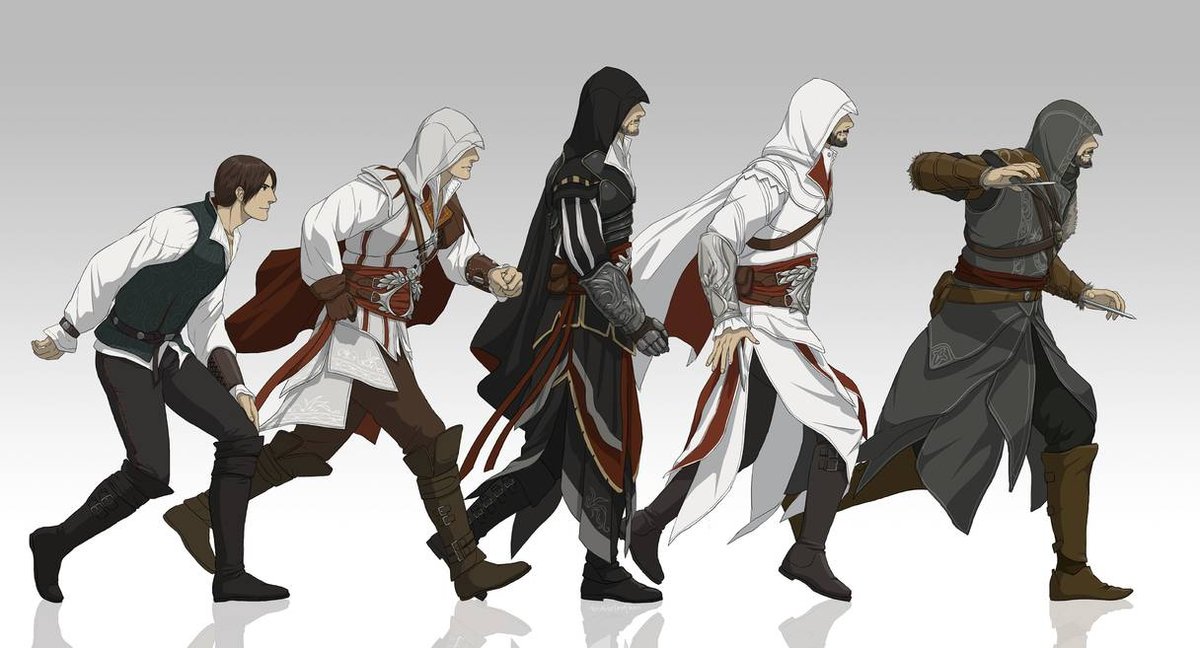
We've all wondered what truly makes us who we are. Is it our upbringing, our inherent nature, or the circumstances we face? The enduring mystery of human character—its origins, its changes, and its profound influence on our actions—lies at the heart of "Character Evolution & Philosophical Impact." This journey takes us from ancient literary heroes to the latest psychological theories, revealing a complex tapestry woven from philosophy, literature, and empirical science. It’s about understanding not just what we do, but who we truly are, and how that identity shifts and solidifies over a lifetime.
At a Glance: Unpacking Character's Depths
- Character has a rich history: From the fated heroes of Greek tragedy to the fragmented identities of postmodern literature, how we portray character reflects societal views on free will, morality, and selfhood.
- Ancient views: Plato and Aristotle laid groundwork, seeing character as an embodiment of virtues or a complex set of habits and traits.
- Modern literary shifts: The Enlightenment emphasized rational, autonomous individuals, while Modernism and Postmodernism explored the inner turmoil and fragmented nature of the self.
- The Situationist challenge: Psychologists like Harman and Doris argue that our behavior is often dictated by subtle situational cues, not stable "global character traits," casting doubt on traditional virtue ethics.
- Nuanced psychological models: The CAPS model offers a dynamic person-situation interaction view, while the Big Five provides a descriptive taxonomy of personality, though both have limitations for moral philosophy.
- Positive psychology's contribution: The VIA framework identifies character strengths, aligning with virtue ethics but facing empirical and methodological questions, particularly regarding the absence of vices.
- The ongoing dialogue: Philosophers and psychologists continue to debate how best to conceptualize character, bridging ancient wisdom with empirical findings to understand human morality and identity.
The Enduring Mystery of Who We Are: A Journey Through Character
For millennia, humans have been captivated by the question of character. What drives a hero to sacrifice, a villain to betray, or an ordinary person to act with extraordinary kindness? Our attempts to answer this have shaped not only our understanding of ourselves but also the very stories we tell.
From Ancient Epics to Modern Minds: Character in Literature
Literature provides a fascinating mirror to the evolving concept of character, reflecting profound shifts in philosophical, cultural, and social thought.
Ancient and Classical Portrayals:
In the grand narratives of Greek Tragedy and Epic Poetry, characters weren't just individuals; they were often embodiments of virtues and vices, their destinies frequently entangled with fate, divine intervention, or inescapable moral imperatives. Think of Homer's Achilles, driven by honor and rage, or Sophocles' Oedipus, a noble king tragically undone by his own unwitting actions and an inescapable prophecy. The focus wasn't on deep psychological realism in the modern sense, but on illustrating the human condition through noble or flawed qualities, often utilizing archetypal figures.
Aristotle, in his Poetics, famously defined the Tragic Hero as "a character of noble stature, whose downfall is not due to their vice or depravity, but rather to an error in judgment or a flaw in their character." This notion highlights a pivotal understanding: character, even in its most idealized or tragic form, involved a recognition of inherent traits and the consequences of their expression.
Philosophically, Plato saw characters as imperfect reflections of ideal virtues or vices, mere shadows of abstract Forms or Ideas. For him, true character resided in the pursuit of these perfect ideals. Aristotle, however, in his Poetics, considered character (or ethos) a more complex, multifaceted entity. He believed it was shaped not just by innate traits, but also by habits and experiences, emphasizing how moral virtues and vices manifest through our actions in the world. This early thinking laid crucial groundwork for understanding character as something both inherent and cultivated.
Modern and Contemporary Development:
As societies evolved, so too did our literary characters. The Enlightenment era brought forth characters who were rational, autonomous beings, capable of shaping their own destinies through reason and individual choice. This period celebrated self-reliance and the power of the individual mind.
Then came Romanticism, a movement that swung the pendulum towards emotion, imagination, and the individual's profound connection to nature. Characters often displayed intense inner lives and a yearning for transcendence.
By the Modernist Literature period, writers like James Joyce and Virginia Woolf shattered traditional narrative structures to delve deep into the human psyche. They innovated with techniques like stream-of-consciousness, offering incredibly nuanced, often fragmented, portrayals of characters' internal thoughts and feelings. This was a direct response to the increasing complexity of modern life and a growing interest in individual psychology.
The journey continued into Postmodernism, where authors like James Joyce (again, pushing boundaries) and Thomas Pynchon went even further, questioning the very idea of a stable, coherent self. In this era, "The postmodern character is a fluid, fragmented, and multiple entity, reflecting the complexity and ambiguity of human experience." Here, characters might embody contradictions, shift identities, or even exist as mere constructs within a larger, often absurd, narrative.
This historical overview demonstrates that our understanding of character isn't static; it's a dynamic concept, constantly evolving as our philosophical inquiries into human nature deepen.
The Philosophical Crucible: Character Under the Microscope of Science
In recent decades, philosophers have increasingly looked beyond literary analysis, turning to empirical data from social and personality psychology to rigorously test and understand moral character. This interdisciplinary approach has led to fascinating debates and new frameworks for grasping who we are, especially when our ethical compass is involved.
When Situations Dictate Our Deeds: The Challenge of Situationism
One of the most provocative challenges to traditional notions of character comes from philosophical Situationism. Its roots lie in psychology's "person-situation debate" of the late 1960s and 70s, which questioned whether personality traits or situational factors were stronger predictors of behavior.
Philosophers Gilbert Harman and John Doris picked up this gauntlet, presenting a two-stage argument:
- Stage One: They argued that empirical studies from psychology demonstrate that most people generally lack "global character traits."
- Stage Two: If this is true, it poses a serious problem for Aristotelian virtue ethics and other theories committed to the widespread existence of such traits.
What exactly are these "global character traits" that Harman and Doris refer to? Doris (2002: 22) defined them by two key aspects:
- Consistency: The trait is reliably manifested across diverse, trait-relevant situations.
- Stability: The trait is reliably manifested over iterated trials of similar trait-relevant conditions.
In essence, someone with a global character trait of compassion, for example, would be reliably compassionate across many different contexts and over time.
Evidence Against Widespread Global Traits:
Harman and Doris marshaled several classic psychological experiments to support Stage One, often focusing on compassion or pro-social behavior: - Dime in Phone Booth (Isen & Levin 1972): This study found that 88% of participants helped a stranger after finding a dime in a phone booth, compared to only 4% in a control group who didn't find a dime. A tiny, seemingly irrelevant situational factor (finding a dime) drastically altered helping behavior.
- Lady in Distress (Latané & Rodin 1969): Researchers staged an emergency where a woman appeared to fall and cry out in pain. When alone, 70% of participants offered help. But when an unresponsive stranger was present, this plummeted to just 7%. The mere presence of another person, even a passive one, dramatically suppressed helping behavior.
- Obedience to Authority (Milgram 1974): Perhaps the most infamous, Milgram's experiments showed that 65% of participants administered what they believed were lethal electric shocks to a learner, simply because an authority figure instructed them to continue. This demonstrated an astonishing sensitivity to authority, often overriding moral qualms.
Based on these findings, Harman and Doris concluded that most people do not possess traditional virtues or vices like compassion because their behavior is highly sensitive to seemingly minor situational influences. Our actions, they suggest, often fail to reflect robust, consistent traits.
The Implication for Virtue Ethics:
If their conclusion holds, it carries a significant implication for Aristotelian Virtue Ethics. If virtue ethics presupposes widespread global traits as a basis for moral character, then it is either empirically disconfirmed for the majority of people or rendered practically irrelevant to how most of us behave. It suggests that virtue ethics might be describing an ideal rarely achieved, rather than a common human reality.
Key Responses to Situationism:
The situationist challenge didn't go unanswered. Philosophers and psychologists offered several counterarguments:
Addressing Stage One (the empirical claim): - Questioning Validity: Some critics argued that the specific experiments cited by situationists don't accurately reflect or measure complex virtues like compassion. Finding a dime, for instance, might induce a temporary good mood, not necessarily reveal a lack of stable compassion.
- Competing Virtues: In cases like Milgram's, some argued that participants weren't necessarily lacking compassion but were exhibiting other traits, such as obedience or respect for authority, which temporarily outweighed their compassionate inclinations.
- Emphasizing Mental States: Instead of simply "situational forces," critics suggested that participants' internal mental states (e.g., fear of embarrassment, anxiety about disobeying) were central explanations, and these could be part of a broader character picture, not just external pressures.
Addressing Stage Two (the philosophical claim): - Rarity of Virtue: Perhaps the most common response: Denying that virtue ethics ever claimed widespread possession of virtues. Plato and Aristotle themselves viewed genuine virtue as rare, requiring extensive training, wisdom, and effort. Thus, situationist findings might confirm, rather than refute, this long-held philosophical perspective.
- Wrong Conception of Aristotelian Character: Critics argue that situationists use a simplistic view of Aristotelian virtue. True Aristotelian virtues are not rigid, context-blind behaviors, but nuanced dispositions requiring practical wisdom (phronesis) to discern the right action in a given situation. A truly compassionate person, for instance, knows when and how to act compassionately, which might mean not helping in certain scenarios, demonstrating individualized consistency rather than mechanical uniformity.
Alternative Character Models:
If traditional global virtues are indeed rare, what does this mean for understanding everyday character? Several alternative models have emerged: - Local Character Traits: These are virtues or vices restricted to narrow, specific situations. Doris himself accepts that most people have these—you might be generous with your friends but not strangers.
- Mixed Character Traits: Proposed by Christian Miller (2013, 2014), this model suggests that most people possess global traits that are neither fully virtuous nor fully vicious. Instead, they are "mixed," comprising both positive and negative dispositions that manifest depending on the context. This offers a more nuanced, empirically plausible middle ground.
The situationist debate has undeniably forced philosophers to confront the empirical realities of human behavior, enriching our understanding of moral character beyond purely theoretical constructs. To truly grasp the scope of Character Evolution & Philosophical Impact, we must explore these deeper scientific approaches.
Beyond Simple Traits: Nuanced Views from Psychology
While situationism offered a sharp critique, other psychological models provide more nuanced frameworks for understanding character, even if they don't always directly address moral virtues.
Mapping the Inner World: The CAPS Model (Cognitive-Affective Personality System)
Developed by Walter Mischel, the Cognitive-Affective Personality System (CAPS) offers a dynamic perspective that moves beyond pure situationism to emphasize the intricate person-situation interaction. It suggests that personality isn't just a set of fixed traits, but a complex system of internal processes.
Core Features of CAPS:
- Cognitive-Affective Units (CAUs): These are the basic building blocks of personality, enduring psychological structures like beliefs, desires, goals, processing capacities, emotions, and self-regulatory strategies. They are relatively stable across individuals.
- If-Then Situation-Behavior Contingencies: Instead of predicting that someone is always X, CAPS predicts "If the individual is in situation Y, then they will exhibit behavior Z." These stable patterns of behavior linked to specific situations form an individual's unique "behavioral signature." For example, "If a child is teased, then he will exhibit X behavior (e.g., withdraw, retaliate, seek help)."
- Nominal vs. Psychologically Salient Features of Situations: CAPS distinguishes between the objective features of a situation (nominal) and those features that have subjective meaning for an individual (psychologically salient). It's the latter that activates specific cognitive-affective units and triggers particular behavioral responses.
- Intraindividual Behavioral Signatures: The key insight is that personality is these stable, predictable patterns of behavior across different psychologically relevant situations. These patterns reflect the stable organization and dynamic interplay within an individual's unique personality system.
Philosophical Relevance:
CAPS is highly relevant to philosophical discussions of character because it can support the existence of character traits as causal dispositions. These traits can be understood as clusters of cognitive-affective units that are reliably activated across various situations, leading to predictable if-then behavioral patterns. While CAPS itself doesn't inherently prove widespread global moral virtues, it provides a robust framework for conceptualizing character as a stable, yet context-sensitive, system.
A Word of Caution:
Some critics argue that while CAPS offers a sophisticated model of personality, it may simply relabel common-sense psychological observations with complex jargon without necessarily offering deeper theoretical insights into the moral dimensions of character. It describes how personality works, but not necessarily what constitutes a good or bad moral character.
The Big Five: A Blueprint for Personality (and Its Limits for Morality)
Perhaps the most dominant and widely researched taxonomy in personality psychology is the Big Five Model (also known as the Five-Factor Model). Its discovery emerged from the lexical hypothesis (the idea that important individual differences become encoded in language) and extensive factor analyses of personality questionnaires.
The Big Five Traits:
These five broad, independent dimensions are thought to capture the most significant variations in human personality:
- Extraversion: Characterized by sociability, assertiveness, energy, and enthusiasm.
- Agreeableness: Reflects a tendency to be compassionate, cooperative, altruistic, and affectionate.
- Conscientiousness: Involves self-discipline, organization, dutifulness, goal-directed behavior, and a preference for planned rather than spontaneous behavior.
- Neuroticism: Represents emotional instability, negative emotionality (anxiety, depression, anger), and nervousness.
- Openness (to Experience): Encompasses intellect, imagination, curiosity, creativity, and a preference for novelty and variety.
Each Big Five trait also has narrower facets (sub-traits). For instance, McCrae & Costa's version of the Big Five framework details 30 facets, such as Competence, Order, and Dutifulness under Conscientiousness.
Why Philosophers Proceed with Caution:
While powerful for descriptive psychology, philosophers often identify several limitations when applying the Big Five directly to questions of moral character:
- Absence of Traditional Moral Traits: The Big Five largely omits core traditional moral virtues like justice, honesty, and courage. While Agreeableness might overlap with kindness, it doesn't capture the full scope of moral excellence. (It's worth noting the HEXACO model adds "Honesty-Humility" as a sixth factor, a step towards addressing this, but it's still far from a comprehensive moral taxonomy).
- Methodological Issues: The Big Five relies heavily on self-report questionnaires. Items meant to assess moral concepts, such as "altruism," can often focus on superficial impressions or manners rather than deeper motivations or actual behavior, raising questions about their ability to capture true moral character.
- Relativistic Trait Conception: The Big Five classifies traits by degree, implying everyone possesses all traits (virtues and vices) to some extent along a continuum. This clashes with philosophical assumptions like:
- (A1) One cannot simultaneously possess opposing virtues and vices (e.g., being both truly courageous and truly cowardly about the same thing).
- (A2) Virtues and vices are often considered threshold concepts; you either have them or you don't, or you pass a certain developmental point.
- Metaphysical Status: Most psychologists view Big Five traits as descriptive labels or classification tools, useful for summarizing behavior. They are not typically seen as metaphysically real causal dispositions that explain the psychological processes of virtue or vice, which is often what moral philosophers are seeking.
Finding the Good: Positive Psychology and the VIA Framework
A more recent approach to character comes from Positive Psychology, which emerged in the early 2000s with a focus on psychological health, well-being, and "character strengths." Its canonical source is "Character Strengths and Virtues: A Handbook and Classification" (Peterson & Seligman 2004).
Development and Criteria:
Crucially, the VIA classification was based on a conceptual scheme derived from philosophical, religious, and cultural traditions worldwide, not initial empirical testing. Peterson and Seligman identified 10 criteria for character strengths, including that they contribute to a good life, are morally valued, are distinct from other strengths, exhibit trait-like generality and stability, and can be embodied in paragons (role models).
The VIA Classification: 6 Virtues, 24 Character Strengths:
The framework organizes 24 specific character strengths under 6 broader virtues:
- Wisdom: Creativity, Curiosity, Open-mindedness, Love of Learning, Perspective.
- Courage: Bravery, Persistence, Integrity, Vitality.
- Humanity: Love, Kindness, Social Intelligence.
- Justice: Citizenship, Fairness, Leadership.
- Temperance: Forgiveness and Mercy, Humility/Modesty, Prudence, Self-Regulation.
- Transcendence: Appreciation of Beauty and Excellence, Gratitude, Hope, Humor, Spirituality.
Philosophical Relevance and Cautions:
The VIA framework is explicitly aligned with virtue ethics, making it highly appealing to philosophers interested in positive moral development. However, it also faces several critical points: - Conceptual Scheme, Not Empirically Derived: Unlike the Big Five, the VIA classification is a theoretical framework first, designed to fit existing philosophical and cultural ideas of virtue. Its empirical validation came after its initial conceptualization.
- Empirical Problems: Subsequent empirical tests, particularly factor analyses, have not consistently supported the proposed 6-factor or hierarchical structure. Research sometimes finds fewer or different underlying factors.
- Methodological Issues: Like the Big Five, the VIA relies heavily on self-report questionnaires (e.g., VIA-IS). While useful, these can be prone to biases (e.g., social desirability) and may not accurately capture "real" character as manifested in behavior, raising concerns about the true depth of the assessment.
- Absence of Vices: A significant limitation for a comprehensive understanding of moral character is the VIA's exclusive focus on positive traits. It provides no systematic classification or analysis of vices, which are equally central to moral philosophy.
Weaving It All Together: The Continuous Evolution of Character
The journey through Character Evolution & Philosophical Impact is a dynamic one, spanning millennia of human thought. From the fated pronouncements of ancient Greek playwrights to the granular data of modern psychology, our understanding of who we are and what drives our moral compass is in constant flux. We've seen how character, once viewed as a divinely ordained destiny or a reflection of ideal forms, morphed into the autonomous individual of the Enlightenment, then fragmented into the complex, often contradictory selves of modern and postmodern literature.
The empirical turn in philosophy, spearheaded by challenges like Situationism, has forced us to confront uncomfortable truths: our behavior is often more context-dependent than we'd like to believe. While the notion of stable, global virtues remains aspirational, models like CAPS offer sophisticated ways to understand character as a dynamic system of internal processes interacting with external cues. Meanwhile, the Big Five provides a robust descriptive map of personality, and the VIA framework offers a positive, virtue-aligned lens for identifying character strengths, despite their respective limitations for comprehensive moral inquiry.
Interestingly, there's a disconnect: philosophers currently pay significant attention to situationism and CAPS, while the Big Five and VIA are far more dominant in contemporary personality psychology. This suggests a vital opportunity, indeed a need, for philosophers to broaden their engagement with the full spectrum of empirical psychology.
Practical Insights for Your Own Character Journey
So, what does this multifaceted exploration mean for you?
- Acknowledge Situational Power: Understand that context matters profoundly. Don't judge yourself or others too harshly based on isolated incidents. Recognize that seemingly minor factors can influence behavior. Instead of asking "What kind of person did that?", ask "What kind of situation facilitated that behavior, and what systems can prevent it?"
- Cultivate Self-Awareness (and If-Then Statements): The CAPS model encourages us to observe our own "if-then" behavioral signatures. "If I'm tired and stressed, then I tend to be irritable." Knowing these patterns allows you to anticipate, plan, and choose different responses. This is a powerful tool for self-regulation and intentional personal growth.
- Virtues as Ideals, Not Just Innate Traits: Embrace the Aristotelian idea that virtue is a skill, cultivated through practice, habit, and practical wisdom. It's a journey, not a destination. Your character isn't fixed; it's a living project.
- Look Beyond the Labels: While personality models like the Big Five are useful for self-description, don't let them box you in. True moral character involves choices, values, and a consistent effort to act in alignment with those principles, often in the face of strong situational pressures.
- Embrace the Nuance of "Mixed Traits": Most of us aren't purely virtuous or vicious. We're a blend. Acknowledging these "mixed traits" can foster self-compassion, encourage humility, and provide realistic expectations for personal development.
- Seek Meaningful Contexts: If situations powerfully shape us, then actively seek out environments and relationships that foster your desired virtues. Surround yourself with people who inspire and challenge you to be your best self.
The ongoing dialogue between philosophy and psychology continues to deepen our understanding of what it means to possess character, how it evolves, and its profound impact on human morality and identity. By engaging with these diverse perspectives, we can gain invaluable insights into ourselves and the complex tapestry of the human spirit.